

When people hear “cyberattack,” they often think first about stolen data. For healthcare, that is only one part of the risk.
A cyber incident can also make systems unavailable. Hospitals have recently had to work around technology outages and, in some cases, alter normal operations while systems were restored. A small clinic has fewer resources to absorb the same kind of disruption.
Downtime is a business and patient-care problem
A clinic may depend on technology for scheduling, accessing information, communicating with pharmacies and specialists, printing, scanning, billing and contacting patients. Losing several of these services at once can quickly become an operational problem even if no data has been stolen.
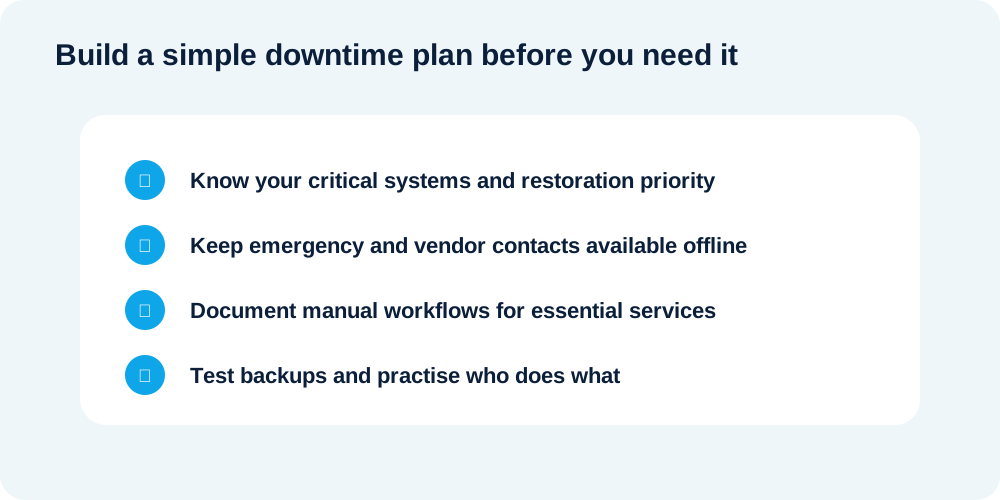
Build a practical downtime plan
Identify critical systems. Decide what must be restored first.
Keep contacts offline. Important vendor, IT, insurance and leadership contacts should not exist only in an unavailable mailbox.
Document manual alternatives. Determine which essential processes can safely continue without normal systems.
Know who decides. Staff should know who can declare downtime procedures, contact vendors and make operational decisions.
Test backups. A backup is valuable only if the required information and systems can actually be recovered.
Practise. A short tabletop exercise can expose missing phone numbers, unclear responsibilities and unrealistic assumptions before a real outage.
A small clinic does not need an enormous disaster-recovery manual. A clear one-page procedure that staff understand can be more valuable than a large plan nobody has tested.
Simple IT. Strong Security. — CyberEase
Does your clinic have an IT downtime plan?
CyberEase helps healthcare offices improve backups, Microsoft 365 security and practical cyber resilience.