The Microsoft Sign-In Page Is Real. The Login Can Still Be a Trap. ›
Device-code phishing can abuse a legitimate Microsoft authentication flow.

Short, useful reads with practical advice you can understand and actually use.

Useful guidance for your computers, business technology and cybersecurity.
Device-code phishing can abuse a legitimate Microsoft authentication flow.
Active exploitation, exposure and business impact should help drive patch priorities.
A recent U.S. case shows why clinic mailbox security deserves serious attention.
Attackers can exploit legitimate authentication changes as social-engineering pretexts.
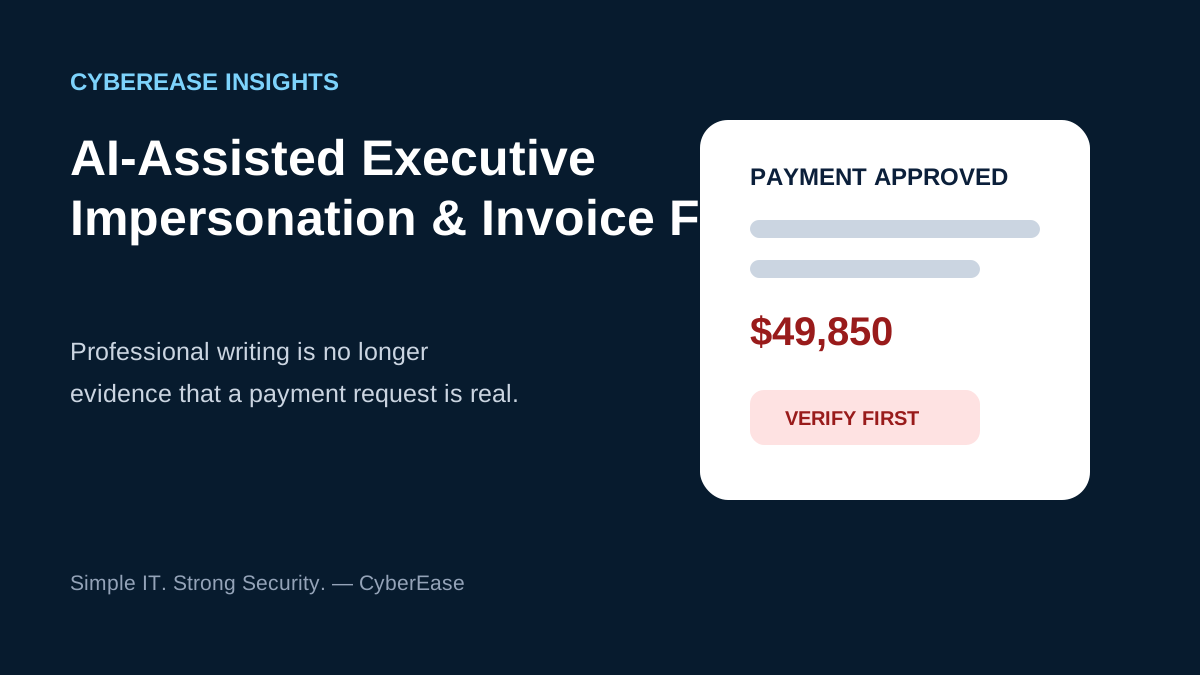
Good grammar is no longer a useful trust signal for payment requests.
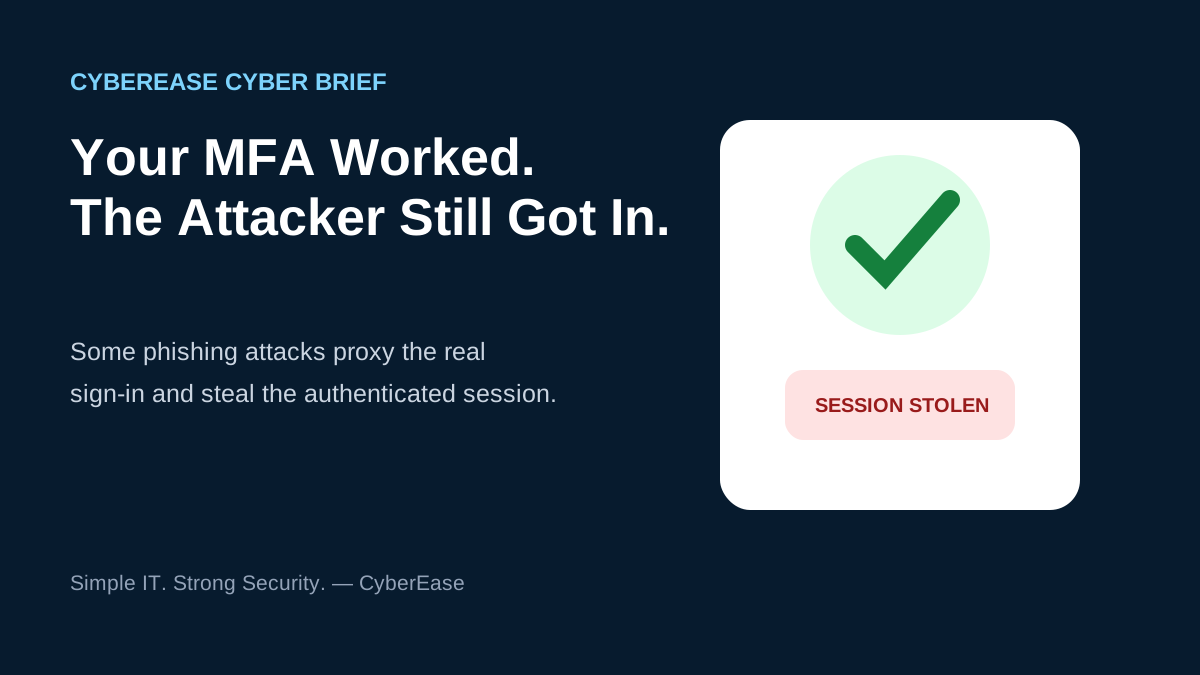
Session-stealing phishing explains why phishing-resistant authentication matters.
AI-enabled automation increases the value of fast detection and clear containment.
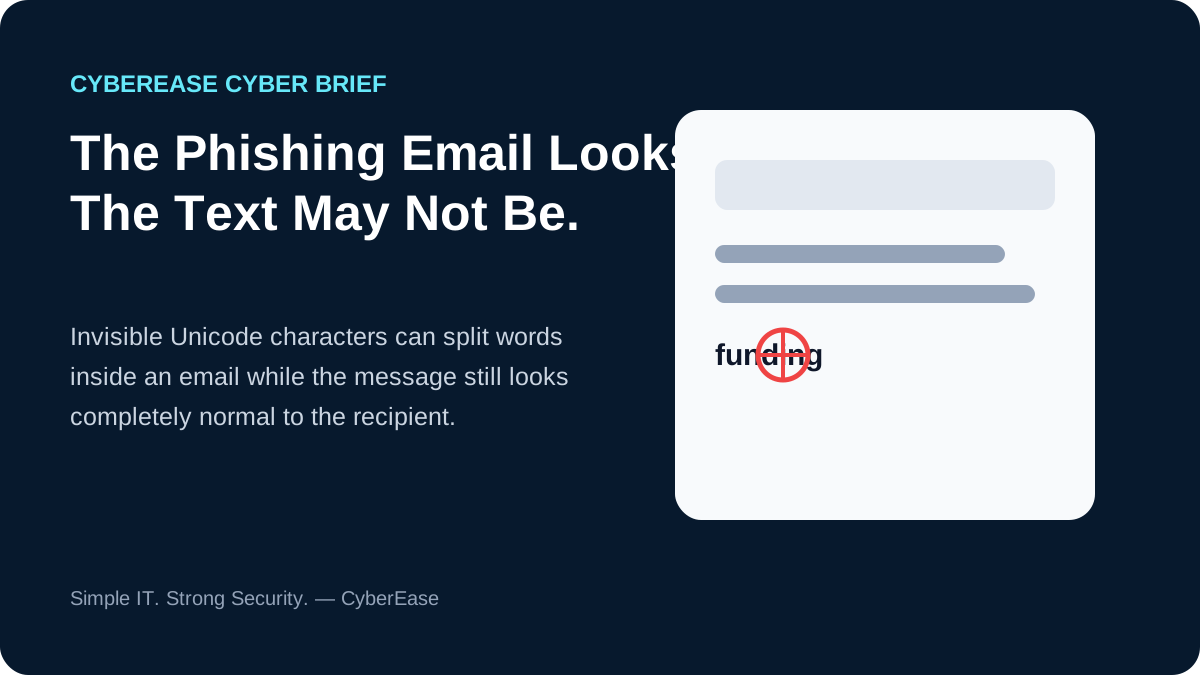
Invisible characters are being used inside ordinary-looking phishing messages.
Cloud applications and vendor portals are part of the security boundary.
AI improves phishing quality and scale, but security fundamentals still work.
A practical downtime plan can keep a cyber incident from becoming operational chaos.
Microsoft is moving authentication toward passkeys.
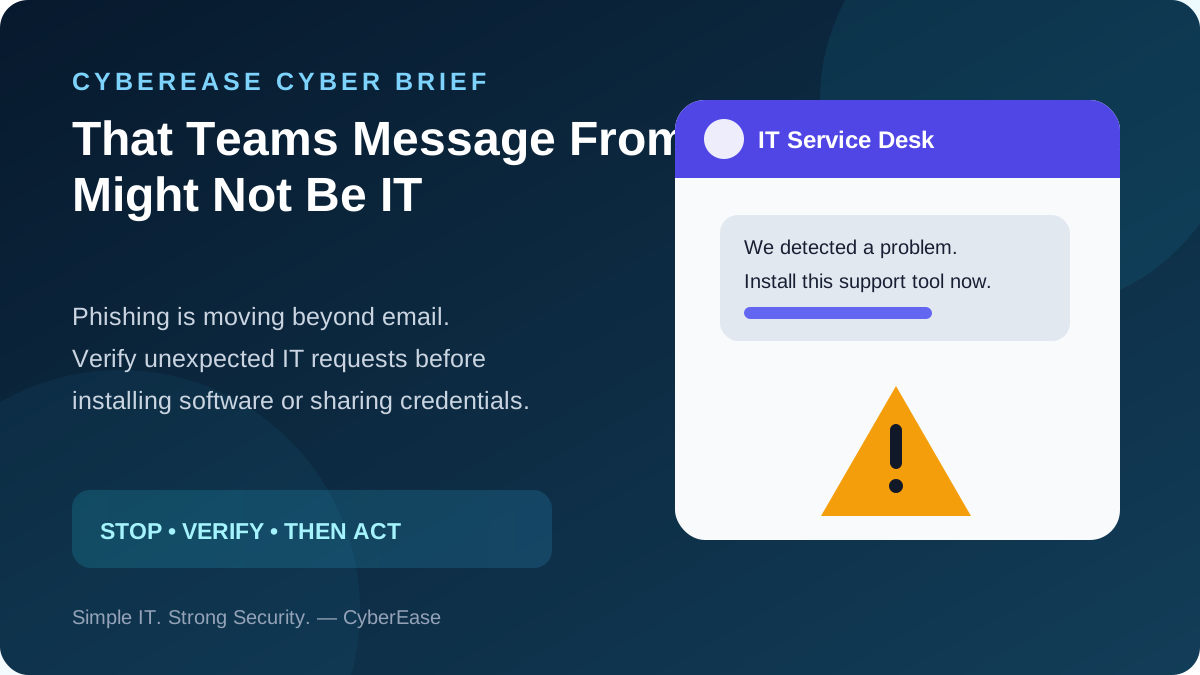
Verify unexpected support requests before you act.
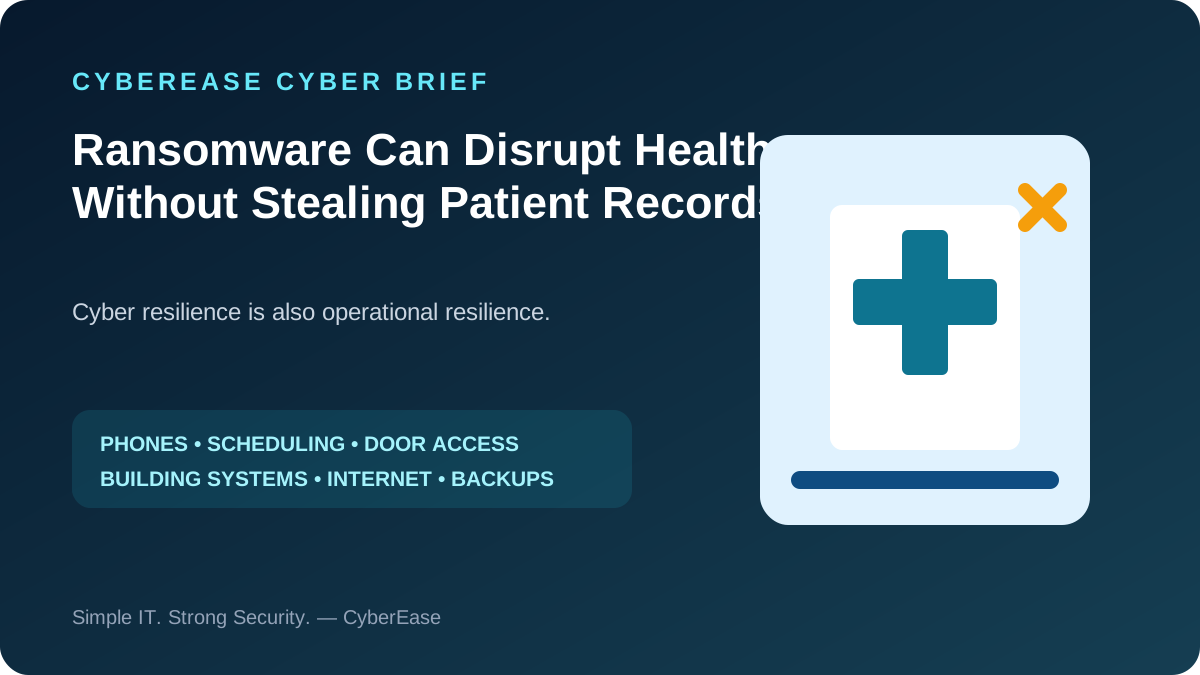
Cyber resilience is also operational resilience.
Simple Windows checks that can help improve performance.
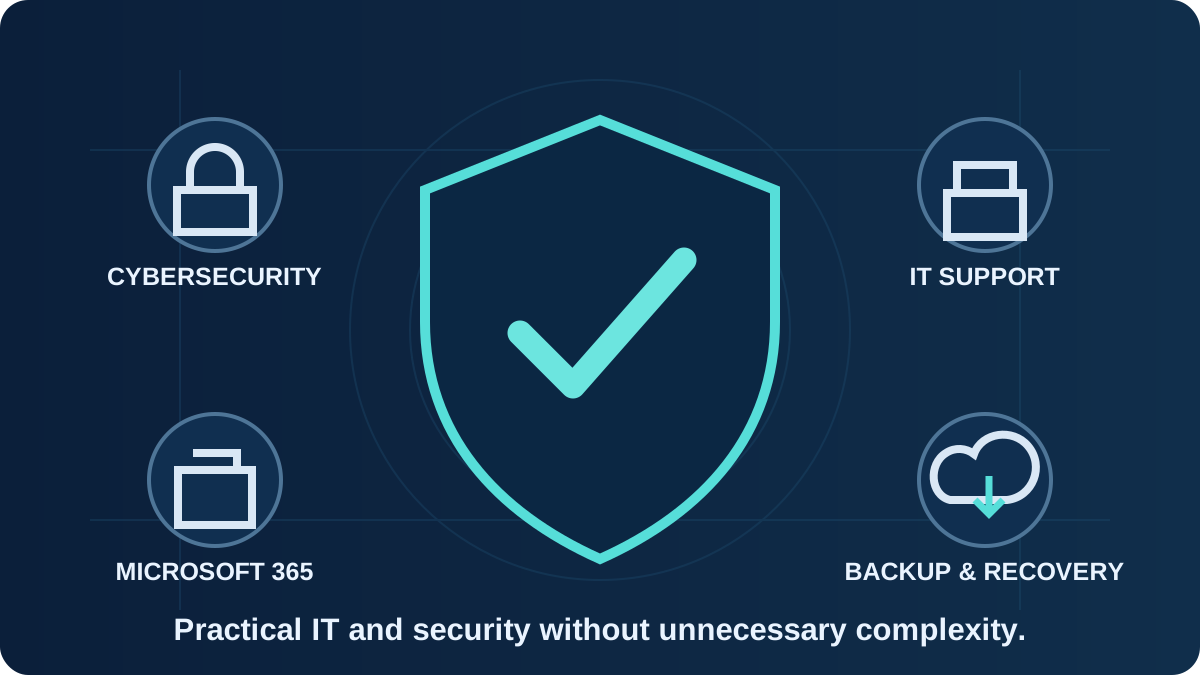
Practical IT support and cybersecurity without unnecessary complexity.
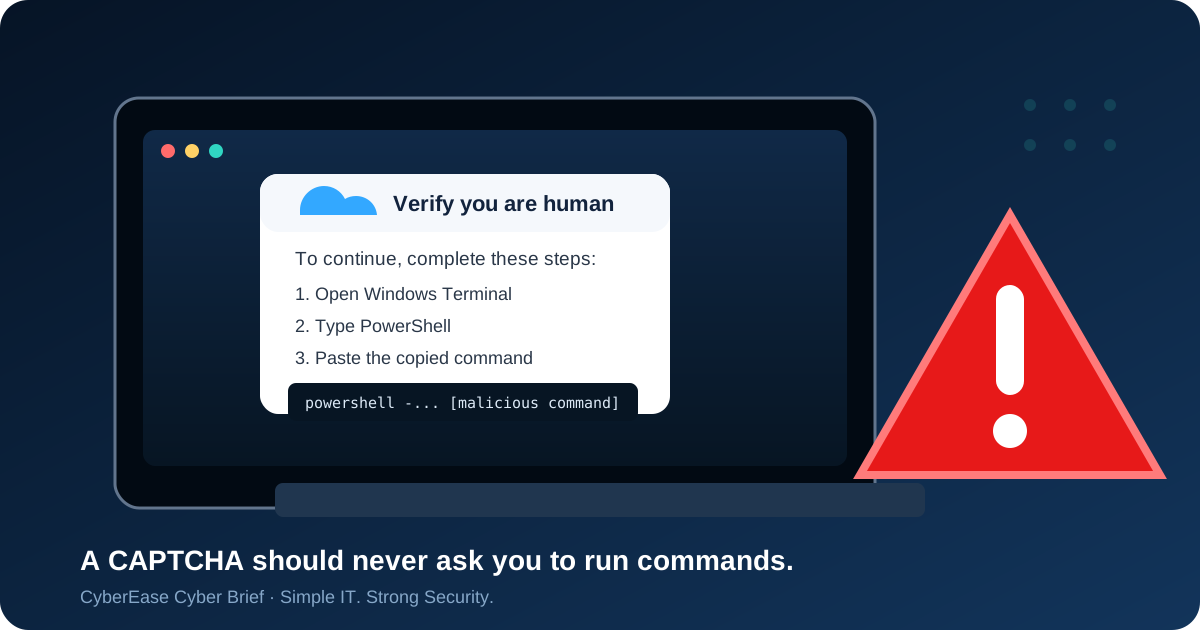
Fake verification prompts can trick users into running malicious commands.